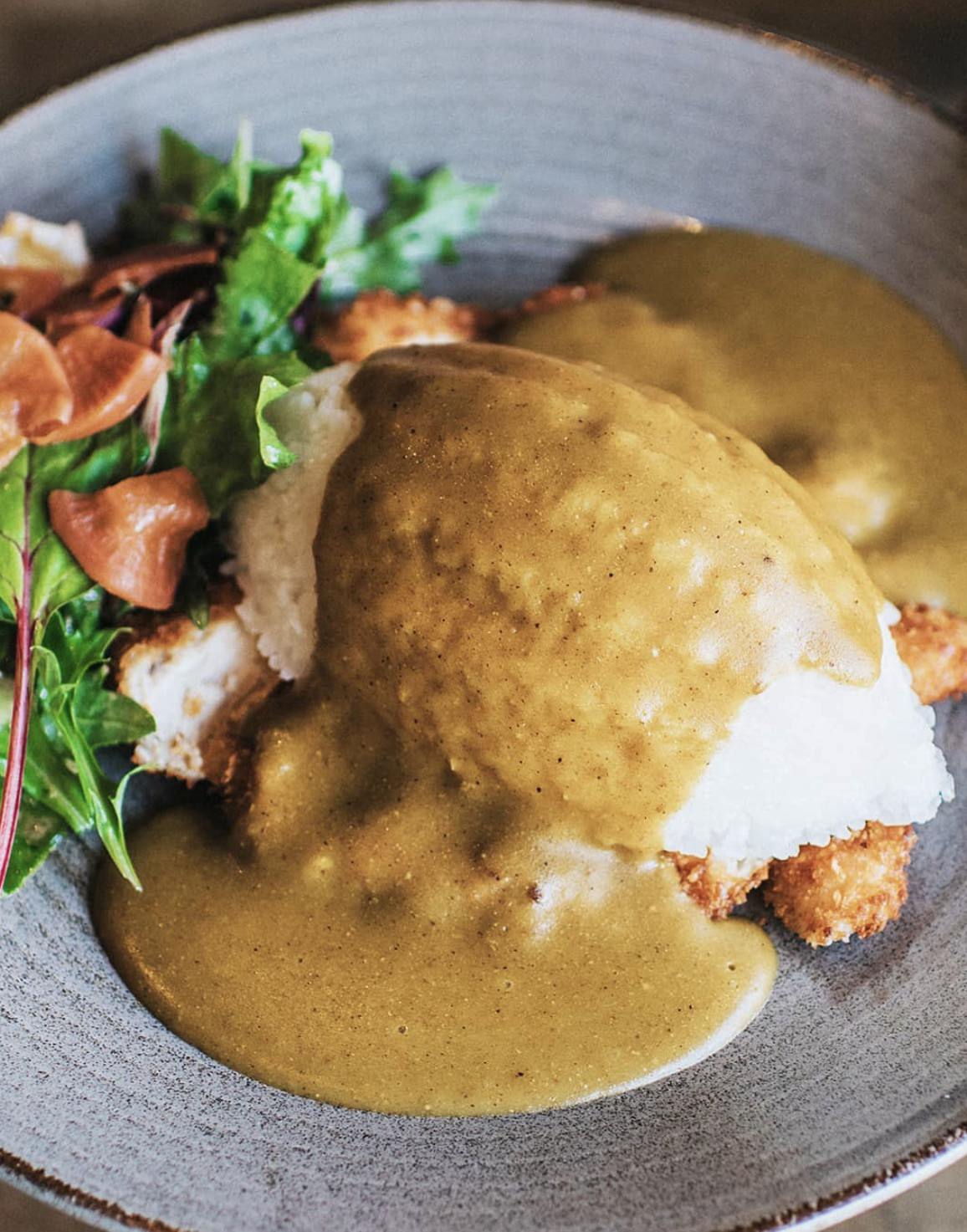
To start making the katsu curry sauce, place the onions, garlic and
ginger in a pan on heat on the hob and stir them as they soften.
Next add the curry mix, before then adding the turmeric and continue
to stir as the strong flavours are released.
Allow the mixture to sit on a low to medium heat for a minute or
so.
Then add the flour, which will help to thicken the sauce, continuing
to mix for a minute as it combines with the spices.
After watering down your chicken or vegetable stock, start slowly
adding it to the mixture. Add a little bit at a time, stirring as you do
so.
Once the chicken or vegetable stock as been added and stirred in,
you can start to add the coconut milk. Although the recipe says to use
100ml, it is up to you how much you would like to use. The more you add,
the creamier it will be. Just as with the stock, add a little bit at a
time as you stir.
Next, add a little bit of a sugar and small amount of soy sauce to
finish off your sauce.
Moving on to the rest of the dish, split your chicken fillet in half
before turning it over in a bowl of flour, then in a bowl of lightly
beaten eggs, and lastly in a bowl of panko breadcrumbs.
Once the chicken fillet has been coated in breadcrumbs, you need to
deep fry it in vegetable oil, turning it over with tongs to achieve a
golden colour. Executive chef Mr Mangleshot recommends being very
cautious at this stage to make sure you do not burn yourself.
Before serving your dish, strain the curry sauce to ensure it is as
smooth as possible.
Cook the rice, which can be any type you would like, and pour it on
the serving plate.
Once your chicken is cooked, remove it from the pan with your tongs,
slice it diagonally in a Wagamama-esque fashion and place it on the
plate next to the rice before adding mixed leaves as well.
Finally, as Mr Mangelshot puts it, “drench” your dish in the famous
katsu curry sauce for the finishing touch.